Monday, 2 February 2009

Analysis of the narrative of Memento (2000)

The film Memento (2000) directed by Christopher Nolan has an extremely interesting and completely unique narrative. The events in the film all take place in reverse order, going backwards in time, so the opening shots that the viewer sees would, in chronological order, be the final shots; the viewer sees the last event in the film first and the first event last. This is very clever because the protagonist Leonard Shelby (Guy Pearce) suffers from anterograde amnesia (short-term memory loss), and thus cannot remember day-to-day events. He makes himself remember recently acquired facts through noting them down on paper, taking Polaroid pictures of places and people and making notes about them on the back of the pictures, and by tattooing the most important facts onto his body. The fact that the events in the film are told in reverse chronological order means that the viewer doesn’t know why the events that he/ she just witnessed took place and what caused them, therefore placing them directly in the shoes of Leonard Shelby. However, in order to further bewilder the viewer, these events that are shown in reverse chronological order (which are shown in colour) are interspersed with a sequence of events, that is largely taken up by a phone call to an unknown caller, that are presented in chronological order (and is shown in black and white) until their time lines meet.


This clever and unique use of narrative adds a very interesting twist and challenges the already popular idea of memory loss and disorientation of the protagonist in psychological thrillers, such as The Long Kiss Goodnight (1996) directed by Renny Harlin in which the female protagonist (Geena Davis) suffers from amnesia, or Alfred Hitchcock’s Marnie (1964). However the success of Memento was likely to have influenced an avalanche of this brand of thriller in the subsequent few years, which saw the release of The Bourne Trilogy (2002/04/07), Paycheck (2003) and also Kill Bill (2003) in which (although none of the characters suffer from memory loss) the female protagonist was in a coma and must get her revenge after waking up, which is still a similar plot line. Comparing Memento’s narrative with other thrillers similar to its kind therefore shows how truly unique its use of narrative is as, despite the similarities between plot lines, its use of reverse chronological order throughout separates it completely and creates a totally different viewing experience.


On the other hand, there are aspects of Memento’s narrative which are conventional to the thriller genre. The male protagonist, for example, and his internal monologue, which causes the viewer to relate to him directly and see his world through his eyes, especially regarding the other characters in the film as, because it is in reverse chronological order, the characters aren’t introduced gradually. Therefore the viewer has only Leonard Shelby’s judgment of them that was jotted down on the back of the photo of the character. This use of narrative directly influences the viewer’s perceptions of the characters and events in the film as he/ she sees it unfold through the eyes of Leonard Shelby. And this causes, really, the biggest twist at the end of the film. This is that Teddy (Joe Pantoliano) reveals to Shelby that he was the cop that worked on the case of his wife’s rape (and previously presumed murder). He then goes on to say that his wife had survived the attack, he just couldn’t remember because he was unconscious and had then developed his condition. Teddy also says that it was his wife (and not Sammy Jankis’ – whose story Shelby had been telling to the unknown caller on the phone) that had diabetes, and that Shelby unknowingly killed her with an insulin over-dose, as described in the phone call. Finally, Teddy says that, because he felt sorry for Shelby, he had helped him track down and kill the man who he thought killed his wife, but that Shelby had forgot due to his condition, so he was helping him to do it again so he could write it down, remember it, and move on. However, Shelby doesn’t believe him, and writes ‘don’t believe his lies’ on the back of his picture of Teddy (and this is how the viewer first perceives Teddy – as a liar). So, at this point there is a huge case of moral ambiguity; does the viewer believe Shelby, with whom he/ she had previously related with? Or does he/ she believe Teddy, who he/ she had previously perceived as a liar? And, moral ambiguity is of course another key convention of thriller narrative.
In Conclusion, there are both conventional and unconventional aspects of Memento’s narrative. The obvious unconventional aspect is that of the use of reverse chronological order, whilst the male protagonist, internal monologue and use of moral ambiguity are examples of conventional aspects.

Guy Pearce as Leonard Shelby in Memento

The history and conventions of Film Noir


The film noir period was one of the most influential movements in film history, and they are still the blue-print for almost all of today’s thrillers. Its classic period lasted from approximately 1941 to 1958, and, although today recognised as hugely influential, they were derided by critics of the time. The term ‘film noir’ was coined by French critics of the 1950’s and early 60’s and American appreciation for the genre only caught up with the French’s in the late 1960’s, but even then this was limited to the new generation of film enthusiasts. The roots of film noir are widely accepted to be deep and diverse. On the artistic side, German expressionism, with its chiaroscuro lighting, distorted camera angles and symbolic designs, was probably the single most important influence on the stylistic aspects of film noir. The silent films that followed (such as The Cabinet of Dr. Cagliari (1919)) and the works of directors Fritz Lang (Metropolis (1927)) and F.W. Murnau (Nosferatu (1922)) were greatly admired by American critics and by the American film industry as a whole. Furthermore, many of the most prominent directors of the film noir period were émigrés from countries (e.g. Germany and France) where expressionism and poetic realism had been the dominant artistic movement over the past decade. These directors include: Fritz Lang, Otto Preminger, Robert Siodmak, Billy Wilder, Edgar G. Ulmer, Max Ophüls, Jacques Tourneur and Jean Renoir. French poetic realist films of the 1930’s are also seen as something of a starting point to the period. These films combined romantic crime thrillers with fatalism in low-life, fog-shrouded settings, such as La Chienne (1931) directed by Jean Renoir, which was even remade by Fritz Lang in America as Scarlet Street (1945). A further heavy contributor was the works of authors of hard-boiled pulp fiction, such as those of Raymond Chandler, James M. Cain, Dashiell Hammet, Cornell Woolrich and David Goodis, whilst the writings of naturalist authors such as Ernest Hemingway and Emile Zola were also influential. It is no surprise, then, that the works of these authors were among the first to be adapted, starting with Hammet’s The Maltese Falcon (1941), Woolrich’s Phantom Lady (1944), Cain’s Double Indemnity (1944) and The Postman Always Rings Twice (1946), Chandler’s Farewell, My Lovely (as Murder, My Sweet (1944)) and The Big Sleep (1946), Hemingway’s The Killers (1946) and Goodis’ Dark Passage (1947). These are all famous examples of film noirs, especially The Maltese Falcon, as it was one of the very first of its kind, and Double indemnity, which, for many people, is the quintessential noir, as it addresses nearly all of the key themes of the genre. Further examples, and in fact the top ten rated film noirs according to http://www.imdb.com/Sections/Genres/Film-Noir/average-vote are shown below:

Rank
Title
1
Sunset Blvd. (1950) 8.7/10 (42073 votes)
2
M (1931) 8.5/10 (31333 votes)
3
Double Indemnity (1944) 8.5/10 (28628 votes)
4
Third Man, The (1949) 8.5/10 (41197 votes)
5
Maltese Falcon, The (1941) 8.4/10 (42174 votes)
6
Touch of Evil (1958) 8.4/10 (26069 votes)
7
Strangers on a Train (1951) 8.3/10 (26616 votes)
8
Notorious (1946) 8.3/10 (24902 votes)
9
Big Sleep, The (1946) 8.3/10 (23327 votes)
10
Ace in the Hole (1951) 8.2/10 (5509 votes)

However, not any film of the 1940’s or 50’s can just be called a film noir, so let’s look at what makes a film noir. The term ‘noir’ was coined for the reason that the films revolved around and were rooted in illegal and immoral events and circumstances. Crime and corruption, therefore, are key themes in noirs. Betrayal, deception and revenge are also common ingredients to the plot of a noir. Further conventional plot lines are ‘The Haunted Past’ and ‘The Fatalistic Nightmare’. These concepts draw heavily from circumstances of the time in which they were made, i.e. America had recently been hit by economic depression and then by The Second World War. ‘The Perfect Crime’, or rather not so, is another important conventional plot-line. Examples of these themes can be found in any noir, Double Indemnity, for example, includes several of these (the perfect crime, deception, betrayal and the fatalistic nightmare are all present), hence its success. Double Indemnity, incidentally, also includes two of the most archetypal characters: The Truth Seeker and The Femme Fatale. The Truth Seeker, contrary to the popular conception, is not primarily a private investigator in the mould of Chandler’s Philip Marlowe or Hammet’s Sam Spade, and could be either an officer of the law (Charlton Heston’s Ramon Miguel Vargas in Touch of Evil) or a criminal (Fred MacMurray’s Walter Neff in Double Indemnity). The femme fatale (also present in Double Indemnity: Barbara Stanwyck’s Pyllis Dietrichson) is the most notorious character in noirs. These are women that are prone to lie, cheat, deceive, betray and kill. Often they aren’t who they say they are (e.g. Mary Astor’s Brigid O’shaugnessy in The Maltese Falcon) and, from the male perspective, are destructive and more often than not lead to the downfall of the protagonist. However, according post-feminist critics, characters such as the ones mentioned were merely strong women trapped in a male-dominated universe and were willing to use any weapon, including their sexuality, to level the playing field. There is also the hunted protagonist. In many noirs, the protagonist is hunted from the beginning to the end, and often finds himself drawn to rebellious criminal acts. Characters such as these are often present in films which also include the theme of the haunted past, as it is something from the past which is ‘hunting’ them. However, this theme is often not literal and has been twisted into paranoia and isolation. A further archetypal character in the private eye; witty and cocky. Prime examples of these are those created by Chandler (Philip Marlowe) and Hammet (Sam Spade). Finally, there is the corrupt official; this could be a policeman (Orson Welles’ Hank Quinlan in Touch of Evil) or any man with a high importance. Examples of all of these characters can be found in modern thrillers also, such was the influence of this noir period, such as Jack Nicholson’s J. J. Gittes in Chinatown (1974) as the private eye, Robert De Niro’s Travis Bickle in Taxi Driver (1976) or Gene Hackman’s Harry Caul in The Conversation (1974) as the hunted and John Huston’s Noah Cross in Chinatown. All three of these films, incidentally, have been dubbed as ‘neo-noirs’ by critics – going back to the massive influence that the noir period had on cinema. However, the noir period has also hugely influenced the mise-en-scene of films like these, as noirs have a very distinctive mise-en-scene and style as a whole.


Barbara Stanwyck (left) and Fred McMurray in double indemnity


Orson Welles in Touch of Evil


Humphrey Bogart in The Maltese Falcon


One of the most recognisable features of noir mise-en-scene is that it is nearly always night, and even if it’s inside, or inside during the day, it is still dark and in a poorly-lit room. The consistent presence of night and constant darkness is a reflection of the theme the fatalistic nightmare, as is another generic signifier that is wet and shiny pavements or rain-lashed streets, as these latter points especially give the films another-worldly feel; that of a nightmare – which is what the world of noir really is, a nightmarish world in which unfortunate coincidences add up to, more often than not, the eventual death or downfall of the protagonist. Coming hand-in-hand with constant darkness, however, comes another of noir’s most distinctive mise-en-scene features: chiaroscuro lighting. This is hard, bright white light clashing, often at diagonal angles, with the darkness. This effect makes for incredibly dynamic and stylish shots, and has also been taken to extreme lengths in some of today’s films such as Sin City (2005) and The Spirit (2008). This use of bright light contrasting with darkness leads to brilliant effects using shadows, as demonstrated perfectly in The Third Man. Chiaroscuro lighting is often achieved via the use of venetian blinds, with the bright lights shining through the slits. Venetian blinds, then, are also a generic signifier, and uses of it can be found in countless noirs, as well as in neo-noirs. They too can be used to reflect the themes of noir, corruption and immorality in particular, as it suggests that the events in the room are hidden away and hushed-up. A further generic signifier is the use of tilted and low angle shots. The latter was used by cinematographers in order to make the characters seem like their rising from the ground in an almost expressionistic manner, giving them dramatic girth and symbolic overtones. A prime example of this effect being used successfully can be found in the shots of Sydney Greenstreet’s Kasper Gutman in The Maltese Falcon. Furthermore, low angled shots allow the viewer to see the ceilings of the interior settings, thus increasing the sense of claustrophobia and paranoia. High angles could also be used to create such emotions, such as in shots peering down a stairwell over a flimsy railing. Examples of fantastically shot tilted camera angles can be found in abundance in The Third man. The urban landscape is also a generic signifier, whilst the use of moving camera and long tracking shots are also common.


Orson Welles in The Third Man


Shadows, tilted angles and wet pavements in The Third Man

In conclusion, then, it is clear that there are many signifiers and conventions of the noir period, whilst it is undoubted that its influence to cinema was, and still is, beyond measure.

Looking For Thriller Conventions

As in any other genre, conventions of the thriller genre can be found in all aspects of a film, including within the narrative, the characterisation, the themes and morals and, finally, the mise-en-scene.


The mise-en-scene, incidentally, is one of the most obvious aspects of a thriller from which to pick out conventions. Of course, mise-en-scenes vary greatly from thriller to thriller, but there is a huge amount of sharing going on. The use of venetian blinds, for example, is one of the most popular pieces of deco on the set of a thriller. Set as standard by what many call the definitive film noirs (The Maltese Falcon (1941) and Double Indemnity (1944)), they went on to be used throughout the film noir era and were also used to great effect in modern masterpieces such as Chinatown (1974) and The Godfather (1972). Another key feature of thriller mise-en-scene is the consistent presence of night, and a general lack of light. This feature also travelled through the generations, again starting off very early (dating back as early as French poetic realist films of the 1930’s, such as Pépé le Moko (1937)), through the film noir era (in which, like the venetian blinds, it was used to great effect and set as standard) right up to modern greats like Taxi Driver (1976). In cooperation with the dark settings of night and dimly-lit offices and bars, chiaroscuro lighting was used to create dynamic scenery. This feature was again “invented” (and probably used to its greatest effect) within the black and white frames of film noirs. However, this feature seems to have been recently reinvented and “re-mastered” in films like Sin City (2005) and The Spirit (2008), in which many features of the conventional film noir mise-en-scene have been used and taken to extremes to create hugely stylised and dynamic shots. Other popular mise-en-scene conventions include: confined and claustrophobic settings, rain-dashed streets and shiny pavements, shots of spiral staircases, urban settings, fog/ mist or rising clouds of smoke/ steam , and also small pieces of furniture/ deco such as fans, and, as mentioned before, venetian blinds. Coloured filters can also be used to great effect, such as in Martin Scorsese's remake of Cape Fear (1991) in which the use of red filters are used very effectively, especially at the very end of the film when Juliette Lewis' Danielle Bowden says in her monologue 'And for myself, I know I'd rather live' after which an extrem close up of her eyes changes first to a white inverse filter (representing her innocence), and then to a red inverse filter (representing how she's been scarred for life by these events). Like this example, many of these features are used as metaphors and are representative of the narrative. A shot of a spiral staircase in the midst of a dramatic scene, for example, can be a metaphor for a climax of the narrative, or a shot of a character walking up a spiral staircase early on in a film (so that this is the first time the viewer is introduced to the character) can be a metaphor for the character entering the narrative of the film. An example of this that has stuck in my mind is that of the scene in The Godfather where Sollozo (who the viewer has heard of but hasn’t fully seen or been introduced to, and is played by Al Lettieri) is shown appearing from a spiral staircase, rising up from the floor below, in order to attend a meeting with Vito Corleone and his associates. In my opinion, this is a subtle yet very effective way to introduce a character. The fan can be used in a similar way; that is to say to reflect a complex narrative, while claustrophobic settings can represent the helplessness or discomfort of a character, such as in Taxi Driver, where Travis Bickle’s (Robert De Niro) taxi is represented as something of a capsule, which in turn represents the isolation and loneliness of the protagonist. This effect is taken to the extreme in Quentin Tarantino’s Kill Bill Vol. 2, in the scene in which The Bride (Uma Thurman) is buried alive inside a coffin. The use of venetian blinds with bright light shining through the slits (chiaroscuro lighting) can also be representative of the narrative, as it can suggest that the events taking place in the badly-lit room are corrupt and dirty, and are secluded and hidden away from acceptable civilisation. The same goes for the feature that is the events in the film primarily taking place at night. Complex narratives, personal danger and corruption are all essential concepts in thriller narrative conventions.


All thriller narratives revolve around some form of crime, yet there are so many ways in which to tell its story. Many thrillers play around with the idea of non-chronology and tell the story in parts with different time lines for each segment (such as Pulp Fiction (1994) or Sin City), while others involve numerous flash backs (e.g. The Bourne Trilogy (2002/04/07) or Kill Bill Vol. 1 & Vol. 2 (2003/04)), or almost the entire film is shown in flashback mode with a narrator (e.g. Double Indemnity). This idea of non-chronology is taken to the extreme in the film Memento (2000), in which the entire film is shown in non-chronological order. Films that use this type of narrative often, but not always, include a protagonist that suffers from memory loss (Memento/ The Bourne Trilogy) or has been in a coma (Kill Bill Vol. 1 & Vol. 2) and therefore use this type of narrative in order to confuse the viewer, thereby allowing him/ her to better feel what the protagonist is going through. The theme of confusion and disorientation of both the viewer and the protagonist, however, is a key concept in many types of thriller, not specifically to those which include aspects of memory loss. Fight Club (1999) for example, is heavily revolved around confusion, but in a different way. However, that too has a male protagonist to whom the viewer is intended to relate to. A male protagonist is present in the majority of thrillers and it is a popular narrative convention. The effect of this is that it biases the viewer’s perceptions of any other character in the film to how he/ she thinks the protagonist might perceive him/ her. This heavily affects the way women are represented in thrillers, as, for example in Chinatown, when the viewer meets Mrs. Mulwray (Faye Dunaway) he/ she interprets her in the way that Gittes (Jack Nicholson) does: as a dangerous femme fatale – which also turns out to be a false perception, thus providing a vital twist in the film. Not just women, however, are marginalized and perceived as destructive. Social groups and ethnic groups are also often victims of this viewer bias that is caused by a protagonist. Russians, for example, are often presented as the “bad guys” (e.g. Eastern Promises (2007)). These things, though, are also heavily linked with, and definitely affect, conventions of characterisation within thrillers.


There are several conventional characters in thriller films. One of these is that of the cocky and “imperfectly perfect” private investigator (such as Humphrey Bogart’s Sam Spade in The Maltese Falcon, or Jack Nicholson’s J. J. Gittes in Chinatown), who are flawed and often don’t think too much of the “system”, but have their own ideas of justice, which, in their cases, usually turn out to be correct. This type of character is more often than not the protagonist in such a film where they are present, and are often hired by another conventional thriller character: the femme fatale, with whom they also frequently become either emotionally or physically entangled with. There are countless examples of femme fatales within thrillers (Barbara Stanwyck’s Phyllis Dietrichson in Double Indemnity, Mary Astor’s Brigid O'Shaughnessy in The Maltese Falcon…). These women are prone to be dishonest, plotting, sexual predators and destructive, and they hugely influence the events in the film. Hand-in-hand with a femme fatale often comes the conventional sap, who the femme fatale intends to take advantage of (e.g. Fred MacMurray’s Walter Neff in Double Indemnity). A further conventional thriller character is, in opposition to the “good” private investigator, the corrupt policeman (e.g. Orson Welles’ Hank Quinlan in Touch of Evil (1958) or Michael Madsen’s Bob in Sin City). However, these characters are more common, but not specific to, film noirs, and many examples of such characters can be found in modern thrillers too. In the thriller sub-genre of mafia/ gangster there are also many conventional characters, most notable the wise and philosophical, aging mob boss, most memorably portrayed by Marlon Brando as Don Vito Corleone in The Godfather. In more modern thrillers and psychological thrillers it is conventional to have a protagonist that is mentally unbalanced, such as Robert De Niro’s Travis Bickle in Taxi Driver, Christian Bale’s Patrick Bateman in American Psycho (2000) or Ed Norton’s The Narrator in Fight Club. Also more common in more modern thrillers is the “honest cop”, such as Kevin Costner’s Eliot Ness in The Untouchables (1987) or Al Pacino’s Frank Serpico in Serpico (1973). The probable reason that these “honest cops” are much more prone to be found in more modern thrillers rather than old is that the dividing line between good and evil is often much more clear-cut in modern thrillers (possibly influenced by the effects of Hollywood) as opposed to classic film noirs, thus giving rise to one of the thriller’s most important themes: moral ambiguity.


Moral ambiguity, along with corruption and crime, is the most important themes in thrillers, and all aspects of the film mentioned thus far (mise-en-scene, narrative and characterisation) are all used to present them. In conclusion, whether it be the composition of the mise-en-scene (such as in American Psycho) that consistently suggests that the protagonist has two separate ways of life which creates moral ambiguity, or whether it be the first person narrative which leads to the viewer not knowing who to believe (such as in Memento), or whether it be through the characterisation of corrupt officials (such as in Touch of Evil) which presents crime and corruption, all of these things are designed to represent one or more of the thriller themes, and that is why there is “so much sharing going on” between thrillers.

Monday, 26 January 2009

Thriller Planning: The shooting schedule


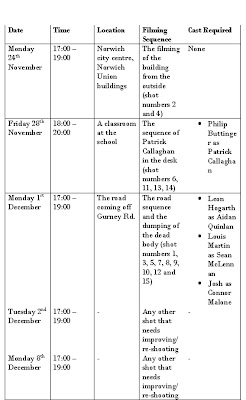
Below is our shooting schedule:
Thriller Planning: The Cast


We need four actors to play in our thriller opening, and they would be playing the roles of Patrick Callaghan, Aidan Quinlan, Sean McLennan and Connor Malone. In order to gain members of cast, we used a conveniance sampling technique, as we felt it best to use people we know and this way we could quickly and easily hand pick the four actors we wanted. As the characters in our thriller opening are threatening men, we thought it best to pick actors that fit this appearance and also age group. The latter applies especially to the character of Patrick Callaghan, as he is an aged crime leader, so we have to have an actor that appears believable under that description (see character profiles for more details). These are the four actors that we acquired:


Philip Buttinger as Patrick Callaghan

We feel that this actor matches the age group and also the appearance of the character we were looking for, as he as quite prominant eye brows which make for a threatening stare, this will be effective in our ECU shot of his eyes (see storyboard).


Leon Hogarth as Aidan Quinlan

Again, we feel that this actor matches, in particular the age group of the character. He also fits the appearance as he is very tall (which you can't tell from this picture) and also quite-well built which makes for a threatening figure.


Patrick Bloomfield as Sean McLennan

Ralf Kendall as Connor Malone

For the actors of the characters of Sean McLennan and Connor Malone, the facial appearances weren't crucial as these are quite marginal characters and their faces aren't focused on in any shot, so for these actors it was more important that they fitted the age group, which we feel that these two do so well.

However, unfortunately certain rules and regulations which we were not aware of meant that Patrick Bloomfield and Ralf Kendall were forced to pull out as our actors. We tried our best to replace them with actors of a similar quality and age group, however due to time running out we couldn't allow ourselves to be too picky. These are the two actors we replaced them with:

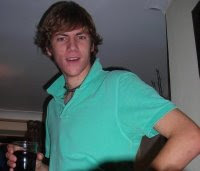
Josh Rowe as Sean McLennan

Louis Martin

We picked these two as our replacements because, although students, they are both fairly tall (Josh Rowe in particular) and also have quite mature faces compared to other options.

Tuesday, 13 January 2009

Thriller planning: Props

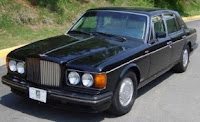
The car: preferably black, dark blue or any shade of colour that doesn’t draw attention to itself. As it is a car of an organised crime group it can’t be too flashy or too big but has to be reasonably fast, in case of any car chases from police or other gangs. Something in the way of a slightly aging luxury car (although probably with a modern and much larger engine) would be the ideal option, such as this 1990 Bentley Turbo R:


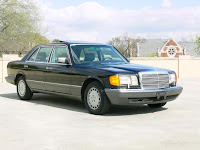
Or this 1990 Mercedes 350SDL:

In reality, however, we know that these cars would be unattainable, so more realistic targets would be just a dark coloured sedan car that is preferably quite a sought after brand, and not too modern either because the car isn't a fashion gimmick, but is probably a few years old by now. Realistic targets would be something like a 1999 Saab 93 sedan or a 1999 BMW 528i as shown below:


In the end we managed to secure the use of a very dark blue Saab 93 sedan, as a group member's father owns one. We are very pleased with this as it was one of our original 'realistic targets'.

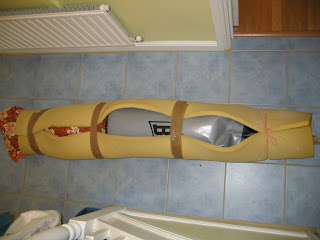
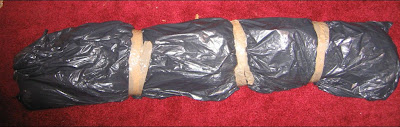
The dead body: This could be many things: pillows/ rolled-up duvet/ sand/ punch bag. Probably the punch bag would be the best option, as it is heavy enough to make a sound and for the actors to have some difficulty carrying it. Also, it is easily attainable, as a group member has one in his garage.
In the end, we decided on using the punch bag, filled out with various pillows/ duvet and then wrapped in black bin-liners and sealed with brown tape:


Cigarettes and Zippo lighters: you can’t have criminals that don’t smoke. Zippo lighters would be used to give the characters in the opening a more sophisticated look and impression of higher status (working for one of the biggest gangs).

Unfortunately however, we were not able to get hold of a zippo lighter, so we will use a regular lighter instead. This is a shame but the difference probably won't be huge to the viewer as it will be dark and the hand of the smoking person would cover up most of the lighter anyway.

The desk: Ideally this could be a mahogany desk that’s quite wide, something that’s grand and sophisticated in order to reflect the characteristics of the crime-lord behind it. It may also be quite old-fashioned rather than modern as the boss is fairly old, so maybe a darker rather than lighter shade of brown.

However, we will have to take what we are given, especially as we are filming in a classroom. But, it will be very dark so the desk itself and its colour and size would barely be visible (if at all).
The big chair: Again, it would ideally be something grand, and possibly out of leather.
But, again, we will use what is in the classroom already as we do not have such a huge choice, and due to the darkness in the room the chair itself won't be hugely visible either.
Costumes: The gangsters in the car would be wearing dark clothes and a large dark coat, as they are the 'muscle' guys doing the dirty work, so they would hardly be wearing flashy white suits.

The boss, on the other hand, would be wearing a dark suit with a shirt and tie. Although not white either, the suit would be quite smart and very very expensive.

Although all of our 'ideals' for the props sound very grand, expensive and glamourous (which also makes them unavailable to us), they would not be presented in a glamourous way (should they have been available), as our opening will be dark, shadowy and rather unglamourous. They would have been used, though, to show that the business of the characters does pay and they have success in it, but then they also end up dead as a result, and although they have money they certainly meet unglamourous engings.

Thursday, 8 January 2009

Continuity Task Script


IN CORRIDOR. CAMERA TRACKS TOM down the corridor. CUTS to interior of room. CHARLIE is already sitting at the table, TOM walks to the table and sits opposite her.


TOM
Ok Charlie, now we’re all here to
help you but you have to talk to us.

CHARLIE
(silence)

TOM
Come on we can never bring this
man to justice if you don’t help us.

CHARLIE
(silence)

[Gives evil stare and raises middle finger]

TOM

Now there’s no need for that.

CHARLIE
(silence)

TOM
Fine have it your way!!!

[Turns, walks out the room, slamming the door]