Sunday, 8 February 2009

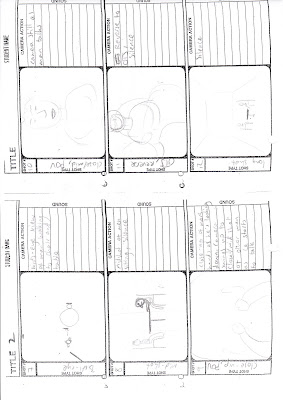
Preliminary Task: Story Boards



Friday, 6 February 2009

Discussing thriller conventions and connotations of themes in our shots and mise-en-scene

Our completed film:


I have prepared a series of screenshots from our thriller opening and then analysed them in detail, discussing the thriller conventions and connotations of thriller themes in our mise-en-scene.

This is our opening shot, and we are very pleased with it. We especially like the moving camera and tilted angles effects as they connote several film noir themes such as disorientation and confusion. Tilted angles, though, can also be used to represent themes of corruption and distorted justice, something which can be said for The Third Man (1949) and also for our own thriller as corruption, along with crime, greed and murder, are all present.


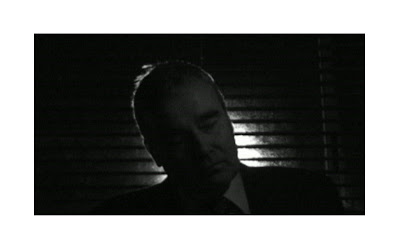
All of our shots of the building use a low angle shot, quite deliberately, in order to emphasize the height and stature of the building. The low angles are also popular techniques of the noir period and also add to the disorientating atmosphere of the film. Therefore, for these reasons, we are very pleased with these shots. However, we are also very pleased with the effects of shadow and dark lines as opposed to light, as these introduce further themes of noir, such as moral ambiguity (good vs. evil - light vs. dark), whilst the shadows add to the theme of corruption and immorality as it suggests that the events are taking place hidden under the shadows. We feel that, regarding the mise-en-scene, this is one of our most successful shots as it introduces several other fundamental themes and conventions of noir. One of these themes introduced is the theme of the fatalistic nightmare. This is done, as it is often done in noir, via the mise-en-scene. For example, the way that the light reflects off one side of the fence connotes a sense of unrealism, as it is not something we see everyday, thereby introducing the nightmarish theme. The same can be said for the way the light shines off the deep black of the car, and the wet, shiny and textured road. There is also evidence of chiaroscuro lighting in the background, which adds a further generic signifier of the noir period. We are, therefore, extremely pleased with this shot. However, looking back, and if given the chance, we perhaps would have made this a slightly tilted angle shot, just to add that extra dynamism and to increase further the sense of disorientation, in a similar way as its done in The Third Man. There is further, and more obvious, evidence of chiaroscuro lighting in this shot, as the dynamic bright light dominates the shot. And, as mentioned before, chiaroscuro lighting is an important stylistic convention in noirs, as it makes for dynamic shots which add to the theme of the fatalistic nightmare, and this is achieved in this shot also, so we are very satisfied with it. However, we have added a further noir convention in the shape of the blinds. Although not 'venetian' (due to an obvious lack of resources), these blinds still add an important generic signifier, as they suggest that the man in the office is one of immorality and corruption, as the blinds partially hide him from the outside. I say partially, for if we assume that outside the office is the law-abiding, honest world and inside it is the corrupt and immoral world whilst the blinds are the barrier between the two, then the blinds are a very suitable barrier in the world of noir as they are merely a 'partial' barrier, thus inducing moral ambiguity, the merging and inseparability of right vs. wrong and the eternal struggle between good and evil. We feel, then, that, especially regarding mise-en-scene, this shot is very effective in inducing conventional themes whilst also being pleasing on the eye. What we like the most about this shot is the rising smoke from the exhaust of the car, so much so that we emphasized this point by having it rise in fast-motion. We are really pleased with the effect this has, as the smoke adds to the unglamorous setting and immoral deeds of the characters. This is another of our favourite shots. Apart from the obvious noir conventions, such as the chiaroscuro lighting, the use of shadows and, this time, regarding characterisation, the unfriendly, smoking henchman doing dirty work for his boss, there are several other conventions present. One of the most important of these is introduced via composition. As we can see, the criminal (Leon Hogarth's Aidan Quinlan) is to the far right of the image, whilst the bright, white light is to the far left, and the middle of the image is made up of trees through which the light shines to create some dynamic silhouettes. In a similar way as we did in the shot inside the office, if we assume that the white light represents good, whilst Quinlan represents evil, and the trees represent the, again, 'partial' barrier, we have once more the theme of moral ambiguity. For these reasons, we feel that this is an effective shot and are extremely pleased with it.In this shot, we are pleased with the further presence of chiaroscuro lighting form the car's rear lights and also from the street light. Also, as you can see, the street light here is quite far in the background, so if we go with our previous assumption that the light represents good then this suggests that the events taking place in this shot are very far away from being classed as good. This is a relevant suggestion as it is at this point in the opening sequence that the dead body is first taken out of the car and exposed to the viewer, so the previous shots of Patrick Callaghan (Phil Buttinger) in the office and of Quinlan (Leon Hogarth) in which there were suggestions of the good vs. evil theme were mere hints towards this shot, in which the evil is present so much over the good that the light representing good has been distanced from it. Here, again, we are pleased with the lighting and the effect of the blinds.This extreme close-up proved to be one of the most popular shots after receiving audience feedback, and we too are very pleased with it. The prolonged eye-contact within close distance causes the viewer to feel uneasy and claustrophobic, especially as this man is assumed to be (and is) an immoral, evil man that the viewer probably doesn't want to relate to, but this ECU is almost forcing them to. Claustrophobia is another key theme within noirs and thrillers in general, so this is an effective shot and so we are pleased with it. Unfortunately it was difficult to capture a clearer image of this shot for there's a lot of movement, and in the darkness. This is a low angle shot of the two henchmen carrying the dead body into the woods. We are especially pleased with two things in this shot. The first of these is the lighting, as once again dynamic chiaroscuro lighting is present, shining down at a nice angle to create its usual dynamic effect. We are also very pleased with the positioning of the camera, that is to say that we like how the shots filmed from inside the woods, with several branches partially obscuring the image. This composition adds to the theme of immorality, as it further suggests that these actions are covered up and hidden away, behind the, again, 'partial' barrier between good and evil in the world of noir. Here, we are pleased with the same things as in the above. However, we also like very much the flash of light from the torch, as this just adds a bit of extra dynamism to the shot via chiaroscuro lighting. Personally, regarding the mise-en-scene, this is definitely one of my favourite shots, and quite possible the favourite. Initially, we weren't sure whether we were going to include it (which would have been a great shame) because, according to our initial ideas, we intended to end the sequence with the dead body dropping to the ground, making this shot (where the henchmen come back from the woods and get back inside the car) non-existent. However, due to a lack of light, we found we were unable to obtain usable shots of the body being dropped, so we decided to use this shot as an alternative confirmation that the body had been disposed of. In the end, we are pleased that it has turned out this way, as we are extremely pleased with the mise-en-scene in this shot. Regarding the composition, we like the way the road cuts across the image diagonally, as this creates a vanishing point which is another very common thriller signifier. However, the main thing we love about this shot is the lighting, and how it almost makes the road look silver, with extended shadows from the trees and darkening the backsides of the wooden stumps lined at the edge of the road. Apart from making the shot pleasing on the eye, these effects all add to the sense of unrealism and the fatalistic nightmare, so we are very pleased with this shot. We also like this shot as a final shot as it creates quite an abrupt yet effective ending. We speeded up the slamming of the boot for some stylistic effect and to emphasize the point that the deed is now done. We also cut out the music at the point that the boot shuts to further emphasize this point. We restarted the music with its main tune when the title comes up largely for stylistic purposes, and we feel that this works well as the main tune of the music is quite catchy and therefore works as an effective backing to the plain title screen. Also, the loud and catchy music contrasts with the plain black and white title screen. Furthermore, this contrast can be perceived as a metaphor for the four men that were responsible for this murder (the three henchmen and the boss in the office), that at face value (represented by the title screen) they appear calm, composed and rational after the deed is done, but behind it (represented by the loud backing music) the evil is still there and still at work.
Thriller Planning: Shooting maps


Thriller Planning: The themes & inspirations for our thriller
Themes
Our thriller includes several key conventions of thriller themes, particularly themes of the noir period. For example, one of the key elements of the full narrative (see synopsis) is the attempted vengeance of Susie Callaghan to kill her uncle as she had always blamed him for her father’s death. In just this piece of the narrative, at least three important conventional themes are present from the noir genre: the haunted past, betrayal and vengeance. A femme fatale is also present in this section, who is an essential figure of the noir period. Revenge is a key theme in our narrative, as elements of it occur throughout, as does greed for power. Both of these things, however, lead to the death of all but one of the characters: the experienced crime lord Patrick Callaghan (Phil Buttinger). Death and downfall, then, are further important themes of our narrative. This, therefore, leads us to the presence of another key noir theme: the fatalistic nightmare. There are, however, many aspects of similarity from films with a sub-genre of ‘mafia’ also, such as The Godfather (1972) and Goodfellas (1990). There will be, then, several aspects of themes such as organized crime and the underworld in our narrative.

Style
As our thriller includes several noir themes in the narrative and characterisation (see character profiles), the style and mise-en-scene will also reflect that of a noir. For example, the opening shots of the road include several tilted angles, immediately connoting edginess, uncertainty and slight discomfort (all of which are themes of thrillers and the noir period). We also included several low angle shots, most notably that of the building from the outside, which was a technique also favoured in the noir period. Our shots of Patrick Callaghan also intend to be low angled shots (similar to those of Sydney Greenstreet’s Kasper Gutman in The Maltese Falcon (1941)), however due to a lack of experienced camera work and resources we don’t expect to be able to make this as obvious as we would ideally like. There are also several examples of chiaroscuro lighting in our opening, such as that of the bright light from streetlights shining down onto the road. We also would like the road to be wet and shiny, as this would add another distinctive noir signifier which also connotes the theme of the fatalistic nightmare. However, this is beyond our control. The shots of the road, incidentally, are also moving camera shots, which is another popular technique in noirs (e.g. in the opening sequence of Touch of Evil (1958)) and also in neo-noirs (e.g. in sections of Taxi Driver (1976)). In conclusion, we are very much aiming for our film to stylistically resemble a film noir.

Sub-genre
Our thriller would take-on both the sub-genres of film noir and also of ‘mafia/ gangster’. This is because it uses conventions from both of these sub-genres.

Key influences
Stylistically and regarding the mise-en-scene, our key influences have been from films from the noir period. For us, the most influential ones have been The Maltese Falcon (in particular the representation of Sydney Greenstreet’s Kasper Gutman) and The Third Man (1949) (especially the use of tilted angles and lighting). Regarding the narrative, though, Chinatown (1974) has been largely influential, as we appreciated its method of story telling and the amount of twists in the narrative. The Godfather, however, has probably been the most influential film to us in this respect. This is because we appreciated its narrative feature of the switch from one main protagonist to another, and, again, the number of twists in its narrative. In our film, however, we are taking this further to have several changes of the main protagonist, with a change each time the previous one dies. The purpose of this, as explained in our synopsis, is to demonstrate to the viewer the immorality and unattractiveness of the life of our characters to the point where the viewer realises that they cannot relate to any of the protagonists that were present. This theme of immorality and sleaze has been taken directly from the films of the noir period. However, going back to the bare bones of our narrative, it has been based (very loosely) upon the story of Romeo and Juliet. This theme is present in shape of the brief (and sham) relationship between David Glover and Susie Callaghan. This influence exists predominantly because of our initial intention to use a track from Sergei Prokofiev’s ballet of Romeo and Juliet as our opening soundtrack. Judging purely on opening sequences though, the opening of Goodfellas has also been influential, as it consists of similar events, and bares a similar context to the rest of the film as ours (regarding the fact that, in a chronological order, it takes place quite a way into the film).

Thursday, 5 February 2009

Preliminary Task: Final product
Below is the video of our preliminary task:

Wednesday, 4 February 2009

Analysing the opening sequence of Touch of Evil (1958)
Touch of Evil (1958) directed by Orson Welles has a very interesting opening sequence as it is made up largely of a four minute single-shot sequence.

The scene starts off with a close-up shot of a man setting the timer of a car bomb, and then runs to the car he has targeted, without the viewer seeing his face, and with the use of some terrific shadows on the wall he has ran past. The camera follows him up to the car and then, as the man turns and runs out of the shot, it drifts upwards slowly to take the viewer into a brilliant high angle shot of the car and its owners (a couple) getting into it. The camera doesn’t stay still though, however, but it keeps moving and follows the car as it drives around a building. As it comes back around the corner, the car now facing the camera, the camera carries on moving backwards in the street, with various people crossing the road and various different music playing from the different cars and buildings that the camera moves past. The viewer, then, doesn’t have too much time to think about who planted the car bomb or who’s in the car as action is on-going in all parts of the shot. Also, the effect of the different pieces of music playing from different sources emphasizes the business and confusion of the setting. The camera keeps on moving and then, as a couple (Charlton Heston and Janet Leigh as Ramon Miguel Vargas and Susan Vargas) cross the road, begins to focus on that specific couple, whilst the car it had been following up to this point overtakes the camera and moves briefly out of the shot. It reappears quite quickly however, as it has been held-up by a group of goats in the middle of the road, at which point the couple then overtake the camera. The car catches up with the couple quite soon though, whilst people continue to cross the road, until both the couple and the car reach an officer who will decide whether they can keep going and enquire whether they’re American citizens. At this point the viewer learns that the Ramon Miguel Vargas is an important policeman who has recently solved a big case involving the notorious ‘Grandi’ family. Both the couple in the car and the Vargas’ are allowed to continue, then, as the car carries on straight ahead, out of the shot, they cross the road and the camera moves to follow them. Shortly after this, the viewer hears the car bomb explode and the camera switches the image of the explosion (this is the point where the single-shot sequence is ended) and then, after a quick, short zoom-in further towards the explosion, it switches back to a low angle, slightly shaky shot of Ramon Miguel Vargas running towards the explosion.


(the opening sequence of Touch of Evil)

This use of the single-shot sequence is very effective in this opening sequence as it ensures that the viewer can’t take his or her eyes off the screen, as there’s always something happening. This is especially the case with the constant over-taking and re-over-taking of each other between the two couples, as the viewer must keep an eye on both of them, but is also emphasized by the continuous crossing of the road by several people at almost all times. Also, the viewer doesn’t have a clue who was in the car, and who planted the bomb, so the long single-shot sequence creates further suspense regarding this mystery. Furthermore, the fact that the camera is always moving backwards causes further disorientation and mystery to the viewer as he or she can't tell how much longer the camera will carry on going for. Regarding the narrative, then, this opening sequence is very successful as mystery is increased throughout.

It is, however, also successful regarding the mise-en-scene, as some excellent uses of shadow ensure that it’s pleasing on the eye. The camera movement and angles are also very effective; in particular the rising high angle shot near the beginning just after the car bomb has been planted. All of these mise-en-scene features, incidentally, are generic signifiers of the noir period.

So, in conclusion, this is a very effective opening scene as is builds tension, introduces mystery, and includes several genre conventions.
Audience Research: Audience feedback from our 75% completed film
Sample & Method

We showed our approximately 75% completed film to eight people in order to gather opinion on what they thought of it so far and how they think it could be improved. Unfortunately, we were unable to ask people which matched our target profile audience, as we collected this data during school times. However, we did keep to our target gender, as out of the eight people 5 were male and only 3 female. This matches our target gender as we stated in our audience profile that, primarily, our target gender would be males, but that females could like it too, so we felt that the roughly two thirds of the feedback from males and one third from females was a good compromise. The people that we asked are all current six formers at City of Norwich School, three of them study media studies and half of the group are big movie fans. We feel that a sample group in which one half are big film fans whilst the other half also watch films but are not so avid followers is reasonable as we said in our audience profile that our film may well be appreciated more by film buffs but would also attract mainstream audiences. Taking these into account, we accept that this data gathered is not from an ideal sample group, but nevertheless we feel that it is a useful exercise and hope that it will provide us with helpful information.

First, we asked each participant to watch the film through, one-by-one, without interruption. We then asked them to fill in a short questionnaire which we had prepared previously. The questionnaire consisted of these questions:

Gender:


Was the mise-en-scene appropriate?


Was the music effective?


Was the narrative readable?


Was the lighting effective?


What aspect of it did you like the most?


How could it be improved?


Findings

Pleasingly, our feedback was extremely positive. For the question ‘Was the mise-en-scene appropriate?’ for example, every single participant (males and females) agreed that it was appropriate, and one male went on to say that it was ‘very’ appropriate as ‘the woods are very secluded’. The responses for the following question, ‘Was the music effective?’, were also very positive, as, again, every participant agreed that it was effective, with one participant (a female) claiming that it was ‘very’ effective whilst another (a male) said that it ‘built tension and atmosphere’. One participant (a female), however, said that it was effective, but ‘could have been better though’. The following question, ‘Was the narrative readable?’, was one that we were very interested in the answer to, as, although we ourselves knew what was happening, were hoping that it was obvious for everyone else too. Fortunately though, all but one of the participants agreed that the narrative was readable, however the one participant (a male) who said that it wasn’t readable also said that this was a good thing as ‘the man in the office was mysterious’. The answers to the subsequent were again extremely positive, as once again every participant agreed that the lighting was effective. We were pleased that this was the case, as we ourselves were very pleased with the lighting in our film. The next question, which we were eagerly awaiting the answers to, provided, as we hoped, a large variety of answers. Three participants (two male and one female) chose ‘he music’ as their favourite, whilst another three participants chose the ‘extreme close-up shots of the man in the office’. Two people (one male and one female) claimed that the ‘quick editing and flashing transitions’ was their favourite. Out of the remaining two participants (both males) one claimed that the ‘slow motion effects, because they’re cool’ were his favourites whilst the last one said that he liked the fact that it was ‘gangster’. The final question was another one that we were excited about the answers to, as the answers to this were the real purpose of the exercise. Unfortunately though, not everyone answered the question, although we took that as a compliment for no improvements could be made. One suggestion that we did receive though (from a male), was that ‘the cast could fit the age description of the characters better and the costumes could be more authentic’. Although there is nothing we can do about this at this point, and our cast was made up by the actors that they were because of certain unfortunate circumstances (see the post entitled ‘Thriller Planning: The cast), we value the opinion nonetheless as we can include it in our evaluation. The other suggestion that we received (also from a male) was to ‘extend the slow motion section, and make the bit where they walk out of the woods slow motion as well’. We were very grateful for this suggestion as, after deliberating between our group, we decided to try it as the participant had suggested, and we, as a group, agreed that it was an improvement.

Conclusion and implications

We were extremely happy with the unanimously positive feedback that we received, and we feel that it has helped us improve our film, thanks especially to the suggestion to extend the slow motion section and to add another slow motion section. Overall, we feel that this has been a useful and positive exercise as the very positive feedback has given us further confidence in our film, and we now feel that we can continue as we have been and get it finished.